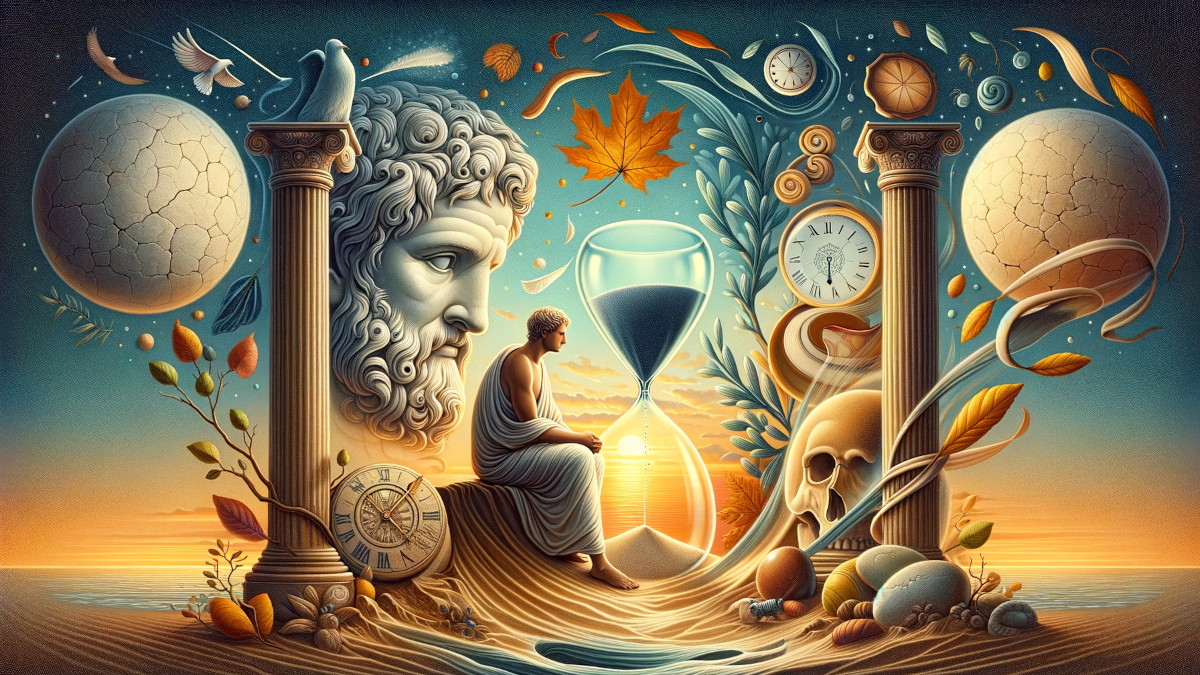
How much time have you got? There is a reason to count in time rather than money. Let’s say you live in reasonably good shape to 70. Seventy years seems like a long time, but then consider that only 50 of them are in adulthood, when you have reasonable independence and can make your own decisions.
Fifty years is 438,000 hours. But you sleep through 8 hours a day, so let’s cut one-third of these hours. There is also the basic maintenance like hygiene, eating, and an occasional visit to a doctor, which may cost you another 4 hours a day. You are left with 12 hours a day, and your life gets reduced to 219,000 hours, which translates back to years: 25 years, or 300 months, or 9,125 days. How do you want to spend it?
All our desires and dreams change the world. Yet, we have something over 9,000 days to do it. Compare it to the history of human civilization, starting at 4,000 BC, for example. That is 6,000 years or 2,190,000 days. Your 9,000 days is nothing in comparison. Not to mention the 14 billion years old universe, which is 5 trillion hours.
We don’t even want to admit to ourselves that it will all stop one day, and we will die.
The Stoic View of Mortality
The Stoic approach to mortality is not one of fear or avoidance but of acceptance and understanding. Stoics argue that acknowledging our mortality is a powerful tool to appreciate life and live authentically. The Roman Emperor Marcus Aurelius, in his Meditations, famously stated, “You could leave life right now. Let that determine what you do and say and think.” This acknowledgment of life’s impermanence serves as a reminder to live with purpose and integrity.
When Markus Aurelius lay on his dying bed in the military camp in Vindobona in 180 AD, he knew he was dying, yet he was calm and content. He knew this moment would come and was preparing for it his whole life through the practice of contemplating his own mortality. He understood that we all must die one day, so why feel anxious about it and spoil the days we have in this life by fretting about it? Similarly, another major figure of the ancient world, Socrates, showed similar indifference towards death. When he was about to be executed, he just informed his friends about it and took it with tranquility.
“Stoics would focus on the quality of life instead of its quantity. And quality of life doesn’t really depend on how long it is. It depends on our character, attitude, and how we choose to live the days we’ve got.”
Of course, being healthy and having a long and satisfying life is preferred over being sick and dying. However, the Stoics would focus on the quality of life instead of its quantity. And quality of life doesn’t really depend on how long it is. It depends on our character, attitude, and how we choose to live the days we’ve got.
Would a longer, well-lived life be preferable to a short one, all things being equal? Of course, it would. However, if you wish for immortality, would you even know what to do with it? How do you live today, this week, this year? Do you live a life worth living?
We prefer not to talk about death, not to even think about it. Stoicism changes this and forces us to contemplate the fact that nothing lasts forever, not even our lives, and we shouldn’t get attached to externals and things we don’t have under our control. It may shine a guiding light on how to live our lives and focus more on our positive impact on the world through the strength of our character and integrity.
Mortality Salience
Mortality salience is the awareness of our own mortality. It is the realization that death is inevitable. The outcome of this awareness is a state of anxiety that triggers the way we think about various activities and impacts our worldviews and sense of self.
Studies have shown that preferences for political candidates of varying leadership styles would be affected by reminders of death. It leads to more favorable evaluations of charismatic political candidates and negative evaluations of a political candidate with a more egalitarian relationship-oriented leadership style.
When we are reminded of death, we are more likely to vote for authoritarian personalities, negatively view people of different cultures and religions, become more moralistic, and yet less willing to share money or extend trust. The thought of our own death makes our current views related to life and even bodily functions more extreme. It reminds us that we are just animals and, therefore, mortal.
This obviously goes in the face of trying to keep our own mortality on the top of our minds. So, how do you reconcile this with the Stoics’ suggestion to remind ourselves of our mortality? Well, death is part of life, so to speak. Part of the problem the studies of mortality salience showed is that we are simply not used to thinking of death as a matter of daily routine.
Thus, we have an extreme reaction when we are presented with it. One could argue that by accepting death as part of life, we remove some of the anxiety thinking about our own death brings. We become immune to the effects and are less likely to be manipulated by authoritarian personalities, and we become more accepting of others who are different from us.
Logic And Mortality
Many philosophers tackled the fear of death by means of logic. You have nothing to fear, especially if you don’t believe in reincarnation or the afterlife. Once you are dead, that’s it. There is nothing afterward and nothing to be scared of. As some religions preach, the alternative is that there is a glorious afterlife waiting for you and, therefore, again, nothing to be scared of.
Obviously, this type of logic doesn’t really work for most people. Fear has nothing to do with logic. It is an emotion and, therefore, can’t be easily reasoned out by the average person. It is not the death itself that we fear. It is a fact that we will stop being alive and enjoy all the aspects that life brings.
Our clinging to the things we have makes us fear losing them, which would also happen if we died. Accepting that everything is temporary helps with that. You enjoy things at the moment while they last, and you remove the expectations that they will last forever.
In The Antidote, Oliver Burkeman points to a suggestion by Russ Harris as an effective way to achieve mortality awareness. Imagine you are eighty years old and complete these sentences: “I wish I’d spent more time on …” and “I wish I’d spent less time on …”. This may remind you not only of your own mortality but also make you think what is truly important in life.
Advantages of Contemplating Mortality
1. Greater Appreciation of Life
Contemplating mortality, as Stoicism teaches, helps us cherish each moment. When we realize that life is finite, every moment becomes more precious. This leads to a deeper appreciation for the present and encourages us to live more fully. Instead of taking life for granted, we learn to value every experience, relationship, and opportunity.
2. Focus on What Truly Matters
Stoicism teaches us that contemplating our mortality allows us to discern what is truly important. This perspective helps us prioritize our actions and choices. We learn to focus on what genuinely adds value to our lives, like relationships, personal growth, and contributing to the welfare of others, rather than transient material gains or superficial success.
3. Development of Resilience
The Stoic practice of contemplating death is also a practice of resilience. By regularly reflecting on the inevitability of mortality, we build emotional and psychological strength. This mental fortitude helps us face life’s challenges calmly and composedly, reducing anxiety and stress.
4. Living Authentically
Awareness of our finite existence encourages us to live authentically. It urges us to be true to ourselves, align our actions with our values, and express our genuine selves. Stoicism teaches that this authenticity is key to a fulfilling life.
5. Reducing Fear of Death
Regular contemplation of mortality can also diminish the fear of death. Stoicism shows us that death is a natural part of life, a process to be accepted rather than feared. This acceptance can free us from the paralyzing fear of death, allowing us to live more boldly and freely.
6. Cultivating a Legacy Mindset
Thinking about death in the context of Stoicism leads to the cultivation of a legacy mindset. It prompts us to consider how we want to be remembered and what impact we wish to have on the world. This can motivate us to engage in actions that contribute positively to others and the world at large.
Implementing Stoic Practices in Today’s World
- Reflect on Mortality Regularly: One practical way to incorporate Stoicism into daily life is through regular reflection on mortality. This can be done through journaling, meditation, or simply taking moments throughout the day to acknowledge life’s transience.
- Practice Mindfulness: Stoicism’s emphasis on living in the present aligns closely with the practice of mindfulness. Being fully present in each moment allows us to appreciate life’s beauty and confront its challenges more effectively.
- Cultivate Virtue: Stoicism teaches the importance of living virtuously. In the context of mortality, this means acting with kindness, integrity, and courage, knowing that our time is limited.
- Engage in Positive Social Actions: Awareness of our mortality can inspire us to leave a positive mark on the world. Engaging in community service, acts of charity, and other forms of social contribution can be ways of embodying Stoic principles.
Putting It All Together
Stoicism, with its pragmatic approach to mortality, offers valuable insights for living in today’s world. By contemplating our mortality, we can focus on what truly matters, appreciate the present, develop resilience, live authentically, reduce our fear of death, and cultivate a legacy mindset. These practices not only enhance our individual lives but also have the potential to enrich our communities and the world at large.
Photo: Generated with Dall-E




Leave a Reply